

Failed Filling: What It Is and Why It Happens
Dental fillings don’t last forever. Whether you have a composite resin or silver amalgam restoration, every filling faces daily wear from chewing, grinding, and bacterial exposure. At Higher Ground Dentistry, failing fillings are one of the most common issues our team catches at routine checkups — often before patients notice any symptoms.
According to the Journal of the American Dental Association, constant assault from eating, drinking, and grinding eventually causes all fillings to fail.
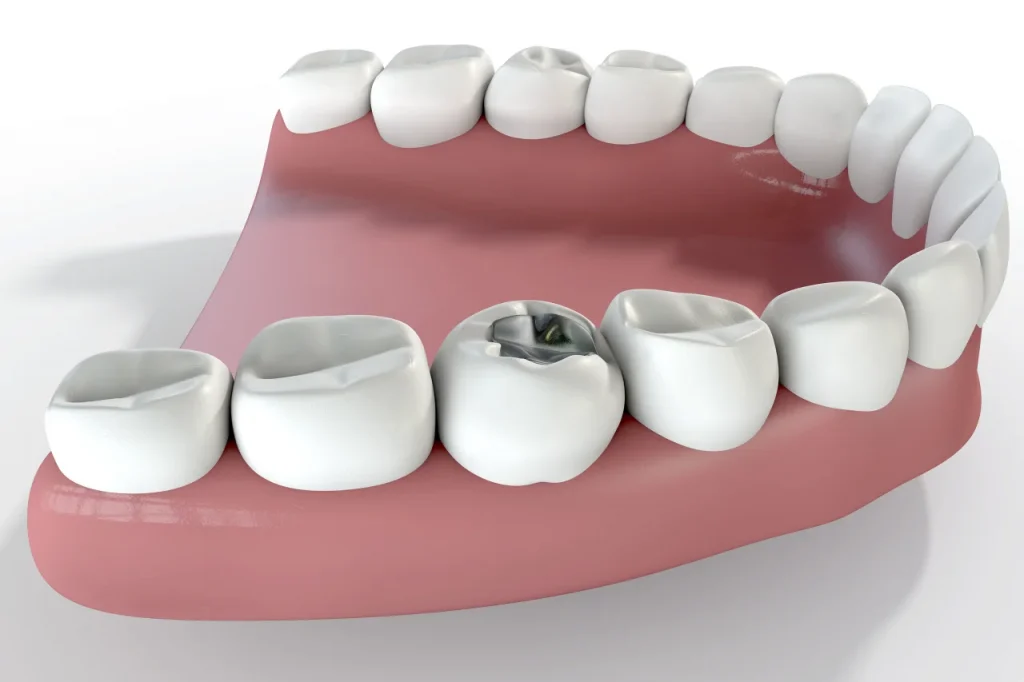
Why Do Fillings Fail?
The Most Common Causes of a Failed Filling
Secondary decay is the leading cause — accounting for over 93% of failed fillings according to clinical research. When a filling’s margin weakens, bacteria enter the gap and cause rapid decay in an area brushing and flossing can’t reach.
Normal wear and tear — composite fillings typically last 7–10 years. Molars bear the most chewing force and tend to wear faster. Our team checks all existing restorations at every visit.
Teeth grinding (bruxism) — significantly increases fracture risk. A custom nightguard protects both your natural teeth and existing fillings from premature failure.
Hard or sticky foods — ice, popcorn kernels, and sticky candies put excessive stress on restorations and can crack or dislodge a filling instantly.
Age and material breakdown — older amalgam fillings can corrode and expand, cracking the surrounding tooth. Regular X-rays reveal these changes before symptoms appear.
Signs Your Filling Is Failing
Failing Filling Warning Signs Your Dental Filling Upland Team Looks For
Watch for these signs at home:
- Sensitivity to hot and cold — sudden sharp pain signals a broken seal between filling and tooth
- Pain when biting — a cracked or shifted filling changes your bite
- Visible cracks or dark lines — around the filling edge
- Rough or jagged texture — material breakdown or chipping
- Food constantly getting stuck — indicates a gap at the filling margin
- Loose or shifted feeling — any change in how the filling feels warrants evaluation
What Happens If You Ignore a Failing Filling?
A failing filling is not just cosmetic. Once the seal breaks bacteria enter rapidly. What starts as a simple replacement can escalate to:
- A larger filling
- A dental crown
- A root canal if decay reaches the nerve
- Tooth extraction in severe cases
Early intervention is always simpler and less expensive — which is exactly why routine checkups matter.
How We Replace a Failing Filling at Higher Ground Dentistry
Our team at Higher Ground Dentistry makes dental filling replacement straightforward:
- Examination and X-rays — assess failure and any decay beneath
- Remove old filling — carefully cleared with any recurrent decay
- Place new restoration — mercury-free tooth-colored composite resin matched to your natural enamel
- Check the bite — ensure perfect fit before you leave
Frequently Asked Questions
What is a failed filling?
A filling that has cracked, worn, loosened, or developed gaps allowing bacteria to enter the tooth. The ADA confirms all fillings eventually fail from daily chewing stress and bacterial exposure.
How long should a dental filling upland last?
Composite fillings typically last 7–10 years. Size, location, oral hygiene, and habits like grinding all affect longevity.
Can a failing filling cause a toothache?
Yes — as decay progresses beneath a failing filling it moves closer to the nerve causing increasing pain and sensitivity. Don’t wait it out.
Does insurance cover filling replacement?
Most plans cover replacement when there is documented clinical need. Our team verifies your benefits before treatment begins — no surprises.
Don’t Wait for a Toothache — Book Your Filling Check Today
A failing filling caught early means a simple affordable fix. Left too long it can mean a crown, root canal, or worse. Schedule your appointment today or call us at 909-946-9090. Serving Upland, Rancho Cucamonga, Claremont, Montclair, and Fontana and surrounding Inland Empire communities.