
Dental Crown Upland CA: Onlay vs. Crown — Which Restoration Do You Need?
When a tooth is damaged by decay or a failing filling, one question comes up immediately — how much of the tooth needs to be covered? According to the American Dental Association, the right restoration depends on how much healthy tooth structure remains after damage is removed.
At Higher Ground Dentistry, Dr. Sikka evaluates each tooth individually before recommending a restoration. The goal is always to protect the tooth while keeping as much of your natural structure intact as possible.
How Dental Onlays and Crowns in Upland CA Protect Damaged Teeth
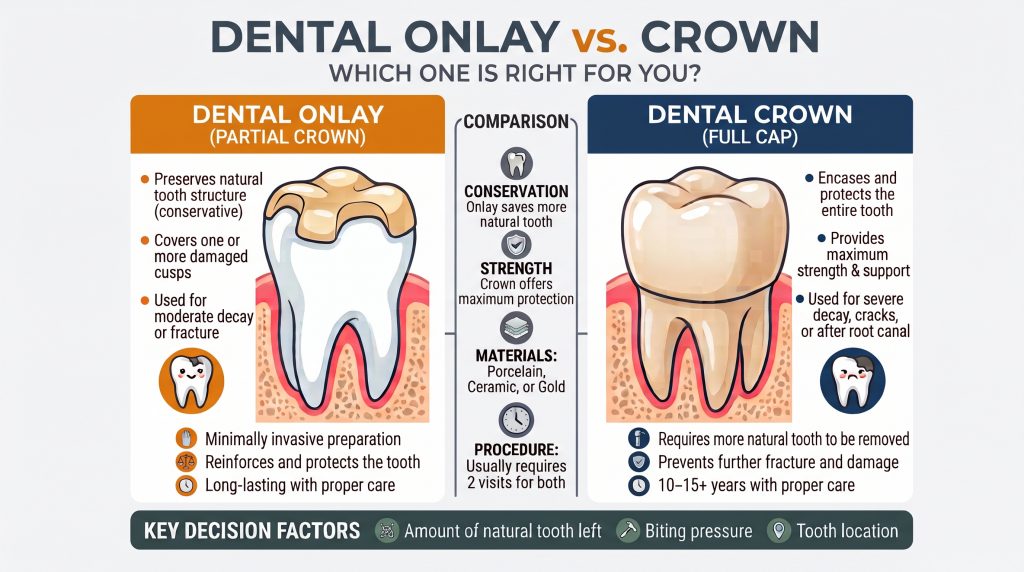
A dental crown covers the entire visible tooth from the top down to the gumline. To place one, the tooth must be reshaped on all sides — typically removing about one to two millimeters of structure, including healthy enamel that cannot grow back.
A dental onlay takes a more conservative approach. It covers only the damaged portion of the tooth — usually one or more cusps — while leaving the remaining healthy enamel intact. Because it bonds directly to the existing tooth, an onlay helps distribute chewing forces naturally.
Dental Crown Upland CA: When Full Coverage Is Necessary
Sometimes a full crown is the only option that makes sense. If multiple cusps are fractured or badly decayed, there may not be enough solid tooth left to support a partial restoration.
Crowns are also commonly recommended after root canal treatment. Without a blood supply, the tooth becomes more brittle over time and more likely to fracture under pressure. A full crown helps protect it.
Severe grinding can lead to the same situation. When cusps are flattened down, a crown acts like a protective shell — covering the entire tooth and helping distribute bite forces evenly. Vertical cracks that extend below the gumline are another reason a crown may be necessary, since a partial restoration cannot fully seal or protect that area.
When a Dental Onlay Is the Better Option
When enough healthy tooth structure remains, an onlay is often the preferred choice. It removes only the damaged area rather than reshaping the entire tooth — which means more of your natural enamel stays in place.
Because the onlay bonds directly to the remaining tooth, chewing forces are shared between the restoration and the natural structure. Many patients find the tooth feels close to how it did before damage occurred. Treatment time can also be shorter since the preparation is more conservative than a full crown.
Dental Crowns and Onlays in Upland: What to Expect During Treatment
Whether the recommendation is an onlay or a crown, the process follows a similar path. The damaged or decayed area is removed, a scan or impression is taken, and a temporary restoration protects the tooth while the final piece is made. At your next visit, the finished restoration is bonded or cemented into place.
Both are durable long-term solutions. With proper care, dental crowns typically last 10 to 15 years or longer. The key difference is how much natural tooth is removed during preparation. An onlay preserves more of the original structure. A crown requires more reshaping — and once that reduction is done, it cannot be reversed.
Frequently Asked Questions
1. Can a dental onlay protect a tooth as well as a crown?
When enough healthy structure remains, yes. An onlay strengthens and protects the damaged tooth while preserving more natural enamel than a crown requires.
2. Will I know before my appointment which restoration I need?
Often, but not always. X-rays and a clinical exam provide good information. In some cases the final decision becomes clear only after all decay is removed during treatment.
3. Does a root canal always mean I need a crown?
Not always, but crowns are commonly recommended after root canal treatment. These teeth become more brittle over time and often benefit from full coverage.
4. How long do crowns and onlays last?
With proper care and regular dental visits, dental crowns and dental onlays typically last 10 to 15 years or longer. Longevity depends on the location of the tooth, your bite, and how well you maintain your oral hygiene at home.
Schedule Your Consultation at Higher Ground Dentistry
The right choice between a dental crown and an onlay comes down to how much healthy tooth structure is still present. Dr. Sikka will examine the tooth closely, review X-rays, and make a recommendation based on what will best support long-term function.
If you have a damaged tooth and want to know your options, call us at 909-946-9090 or schedule your consultation online. Higher Ground Dentistry serves patients across Upland, Rancho Cucamonga, Claremont, Montclair, and Fontana. Open Saturdays and Sundays for your convenience.